- Written by: Admin
- July 26, 2026
- Categories: Education
- Tags: , how to start yoga with children, kids yoga for beginners, online yoga for kids, yoga for children ages 4 to 12
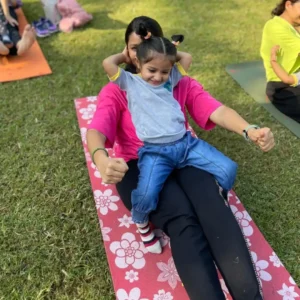
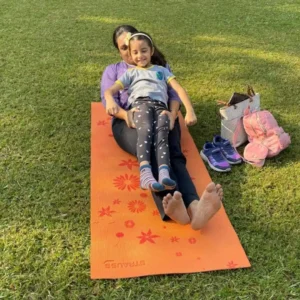
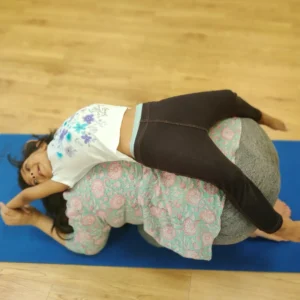
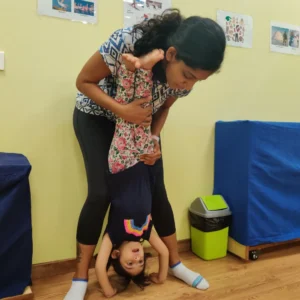
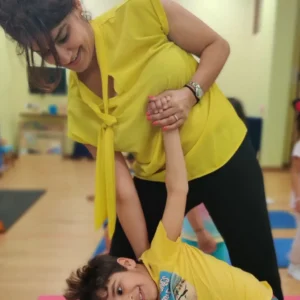
You don’t need a yoga studio, matching outfits, or any prior experience. If you have a small child, a little floor space, and ten minutes, you have everything you need to start yoga at home with your child today.
In 2026, more parents than ever are bringing yoga into their homes — not as a workout, but as a daily tool to help children feel calmer, focus better, sleep more soundly, and handle the emotional ups and downs of growing up.
Here is everything you need to know to get started.
What Makes Kids Yoga Different?
Kids yoga uses the same core principles as adult yoga — breath, movement, and mindfulness — but delivered through stories, animals, music, and imagination. Children are not just holding a Warrior Pose. They are being a powerful lion, a stretching cat, or an explorer in a jungle.
This approach produces results that go far beyond flexibility:
- Improved focus and concentration at school
- Better emotional regulation and fewer meltdowns
- Calmer bedtime and improved sleep quality
- Greater body confidence and resilience
- A natural tool children can use independently when stressed
For a deeper look at the science, read our blog Benefits of Yoga for Kids’ Brain Development and Concentration.
What Age Can Children Start?
Ages 4 to 6 — Keep sessions to 10–15 minutes using animal poses, songs, and simple stories. Variety matters more than precision at this age.
Ages 7 to 9 — Sessions can extend to 20 minutes with balance poses, breathwork games, and simple flows.
Ages 10 to 12 — More structured 25-minute sessions work well, with mindfulness exercises and conversations about managing stress and emotions.
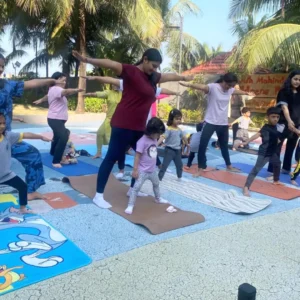
For live, age-grouped classes led by expert teachers, our Online Yoga Classes for Kids are organised into Little Yogis (4–6), Yoga Adventures (7–9), and Yoga for Tweens (10–12).
5 Beginner Poses to Try With Your Child Today
No experience needed — just play along.
- Mountain Pose — “The Tall Tree” Stand with feet together, arms by sides, eyes closed. Take three slow breaths together. Teaches stillness and body awareness.
- Cat-Cow — “Grumpy Cat and Happy Cow” On hands and knees, arch on the inhale, round on the exhale. Children love the silly names — and the movement paired with breath is one of the best natural calming tools available.
- Tree Pose — “The Jungle Tree” Stand on one foot, other foot on the ankle, arms as branches. Wobbling is allowed — trees sway but stay rooted. Builds balance and focus.
- Child’s Pose — “The Sleeping Turtle” Kneel and fold forward, forehead on the mat, breathe slowly. Teach your child to come here anytime they feel overwhelmed. The ultimate reset pose.
- Butterfly Pose — “The Resting Butterfly” Sit with soles of feet together, gently flap the knees, breathe deeply. A perfect way to wind down after any session.
For breathing games that make these poses even more effective, read Simple Breathing Exercises for Kids to Improve Focus and Sleep.
Tips to Make Home Yoga Stick
Use stories not instructions. Instead of “do Downward Dog,” say “let’s be dogs exploring a forest.” Story makes movement irresistible.
Keep it short. A 10-minute session your child enjoys beats a 30-minute one they resist every time.
Let them lead. Ask your child to invent a pose and give it a name. Ownership drives consistency.
Use screen-free tools. Our Yoga Flashcards and Activity Books turn home practice into a game children can lead themselves — no device needed.
The Best Online Kids Yoga Courses for Home
When you are ready for a structured programme, Yoga Guppy’s story-driven courses are designed for children who are completely new to yoga:
The Jungle Yoga Trail — Ages 4 to 8. A jungle adventure with animal poses, original music, and breathwork games. Perfect for absolute beginners.
The Yoga Explorers — Ages 4 to 8. An exploration-themed course with progressive skill building and storytelling throughout.
The Yoga Adventureland — For children ready for more adventure and variety. A full yoga journey with activity sheets and a certificate of completion.
All three include lifetime access. Not sure where to begin? Explore our Free Resources to try the Yoga Guppy method before committing, or browse our full course library.
Conclusion
Starting yoga at home with your child does not require planning, experience, or equipment. It requires a little space, a playful attitude, and five minutes to try the poses above.
Start today. Your child’s yoga adventure begins here.
Frequently Asked Questions
Q1. What age can children start yoga at home?
Children can start as early as age 3 with simple play-based sessions. Yoga Guppy’s courses are designed for ages 4 to 12 with content matched to each developmental stage.
Q2. Do I need to know yoga to practice with my child?
Not at all. Simply playing along is enough. Following a guided online course together or using yoga flashcards requires no prior knowledge from the parent.
Q3. How long should a kids yoga session be?
Ages 4 to 6: 10 to 15 minutes. Ages 7 to 9: 15 to 20 minutes. Ages 10 to 12: 20 to 25 minutes. Enjoyment always matters more than duration.
Q4. What equipment is needed for kids yoga at home?
Just a mat or soft surface and comfortable clothes. Yoga flashcards and activity books are great optional extras that make practice screen-free and child-led.
Q5. Which Yoga Guppy course is best for a complete beginner?
The Jungle Yoga Trail is perfect for first-time yogis aged 4 to 8 — story-based, music-led, and completely beginner-friendly with lifetime access.