- Written by: Admin
- July 20, 2026
- Categories: Class, Education, School, Students
- Tags: , Anxiety in Children, Calming Activities for Kids, Kids Breathing Exercises, kids mindfulness, Yoga for Anxious Kids
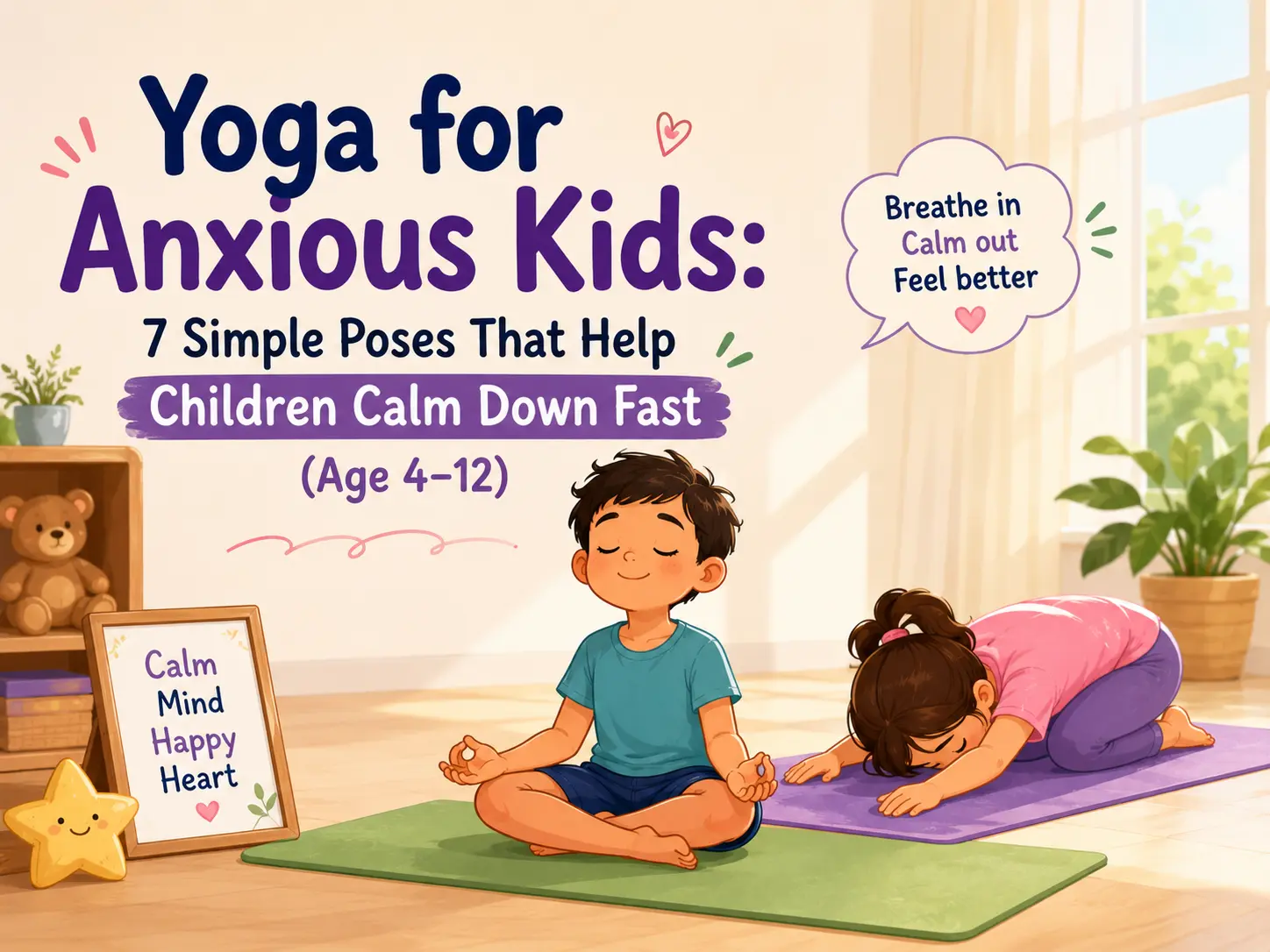
If your child seems more worried, clingy, or overwhelmed than usual — you are not alone, and neither are they. Childhood anxiety is one of the fastest-growing concerns among parents and teachers worldwide in 2026. The good news? Kids yoga is one of the most effective, natural, and enjoyable tools available to help children manage anxiety — and it works from the very first session.
In this guide, you’ll discover why yoga works for anxious children and 7 simple poses you can try with your child today.
Why Yoga Works for Anxious Kids
Anxiety activates the body’s “fight or flight” response — raising heart rate, tightening muscles, and flooding the body with stress hormones. Children, especially those aged 4 to 12, often don’t have the words to explain what they’re feeling, which makes anxiety harder for parents to spot and address.
Yoga works by doing the opposite — it activates the body’s natural calm response through:
- Slow, deep breathing that directly calms the nervous system
- Gentle movement that releases physical tension stored in the body
- Storytelling and imagination that redirect a worried mind to something joyful
- Repetition and routine that create a sense of safety and predictability for children
Unlike adult yoga, kids yoga uses animals, adventures, and stories to make every pose feel like play — which is exactly how children learn and heal best.
If your child struggles with focus alongside anxiety, our blog on Benefits of Yoga for Kids’ Brain Development and Concentration explains how movement and mindfulness improve both at once.
7 Simple Yoga Poses to Calm an Anxious Child
1. Child's Pose — "The Hiding Turtle"
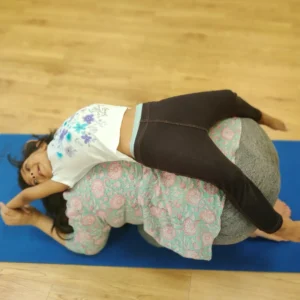
Kneel and fold forward, arms stretched out or resting by the sides. Tell your child they are a turtle tucking safely into their shell. Breathe slowly here for 5–8 counts. This grounding pose creates an immediate sense of safety and calm.
2. Butterfly Pose — "The Resting Butterfly"
Sit with the soles of the feet together, gently flapping the knees like butterfly wings. Add slow belly breaths. This gentle hip opener releases tension children store physically when they feel anxious or upset.
3. Tree Pose — "The Strong Tree"
Stand on one leg, place the other foot on the ankle or inner calf, arms like branches overhead. Trees don’t fall in the wind — they sway and stay rooted. This pose builds focus, balance, and a quiet sense of strength.
4. Cat-Cow — "The Grumpy Cat and the Happy Cow"
On hands and knees, alternate between arching and rounding the spine with slow breaths. Children love the silly animal names — and the rhythmic movement paired with breathing is one of the fastest ways to shift out of an anxious state.
5. Star Pose — "The Shining Star"
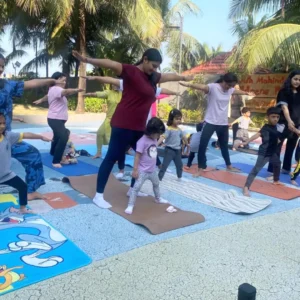
Stand with legs wide and arms stretched out — a big, open starfish shape. Take a deep breath in and stretch even wider. Exhale and relax. Power poses like this genuinely help children feel braver and more confident within moments.
6. Legs Up the Wall — "Rocket Ship Countdown"
Lie on the back with legs resting up a wall. Count down from 10 to 1 with slow breaths — like a rocket getting ready to launch. This restorative pose calms the nervous system deeply, making it perfect before bedtime or after a stressful school day.
7. Belly Breathing — "The Teddy Bear Breath"
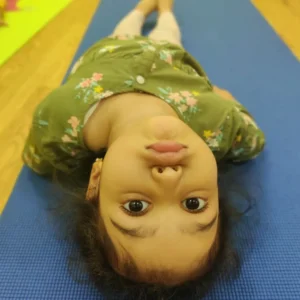
Lie on the back with a favourite soft toy on the belly. Breathe in to make the teddy rise, breathe out to make it fall. Five rounds of this is often enough to noticeably calm an anxious child — it’s simple, fun, and deeply effective.
For more breathing tools, our blog Simple Breathing Exercises for Kids to Improve Focus and Sleep has a full set of breath games children love.
How to Make This a Daily Habit
Consistency is where the real magic happens. Even 5–10 minutes of yoga daily helps children build emotional regulation skills that carry into school, friendships, and stressful moments throughout their lives.
If you’d like a fully structured, story-driven yoga programme your child can follow independently at home, our themed online courses are designed exactly for this. The Jungle Yoga Trail and Yoga Explorers courses use adventure stories, music, and games to keep children engaged — while building the calm, focus, and strength that anxious children need most.
For schools looking to integrate these tools into the classroom, our Kids Yoga Classes and School Curriculum programme brings structured, expert-led yoga directly to your students.
And if you’d like fun, portable tools to use at home or in the classroom, our Yoga Flashcards are a perfect companion — giving children a simple, visual way to pick a pose and practice independently.
Conclusion:
Anxious children don’t need to be fixed — they need tools, consistency, and a safe space to move, breathe, and feel understood. Yoga gives them all three in a way that feels like play rather than therapy.
Start with just one pose today. See how your child responds. And if you’re ready to turn that one pose into a practice they love and look forward to every day, explore our Online Yoga Courses for Kids — built for little yogis aged 4 to 12, with lifetime access and no equipment needed.
Frequently Asked Questions
Q1. What age can children start yoga for anxiety?
Children as young as 3–4 years old can benefit from simple yoga poses and breathing exercises. Yoga Guppy’s courses and classes are designed for ages 4 to 12, with age-appropriate poses and storytelling for each group.
Q2. How quickly does yoga help anxious children?
Many children feel calmer within a single session — especially with breathing exercises and grounding poses. Long-term emotional regulation skills build with consistent daily practice over 3–4 weeks.
Q3. Do I need equipment for kids yoga at home?
No equipment is needed — just a yoga mat or soft surface and some space to move. Our online courses require nothing more than a screen, a mat, and an enthusiastic little yogi.
Q4. Can yoga replace therapy for a child with anxiety?
Yoga is a powerful complementary tool but is not a replacement for professional support. If your child’s anxiety is significantly affecting daily life, consult a child psychologist or paediatrician alongside building a yoga practice.
Q5. How often should anxious children practice yoga?
Even 5–10 minutes daily makes a meaningful difference. Three to five sessions per week is ideal for building consistent emotional regulation and calm.