- Written by: Admin
- May 14, 2026
- Categories: School
- Tags: , brain boosting activities for kids, kids focus activities, reduce screen time for kids
Benefits of Yoga for Kids’ Brain Development and Concentration
In today’s fast-paced and digital world, children face more distractions than ever before. From online classes to mobile devices, maintaining focus has become a real challenge. Parents and educators are now actively looking for natural ways to support children’s mental growth — and yoga is emerging as one of the most effective solutions.
Understanding the benefits of yoga for kids’ brain development and concentration can help you introduce a powerful habit that enhances not just physical health, but also cognitive performance.
How Yoga Supports Brain Development in Kids
Yoga is not just a physical activity — it is a mind-body practice that stimulates brain function through movement, breathing, and mindfulness.
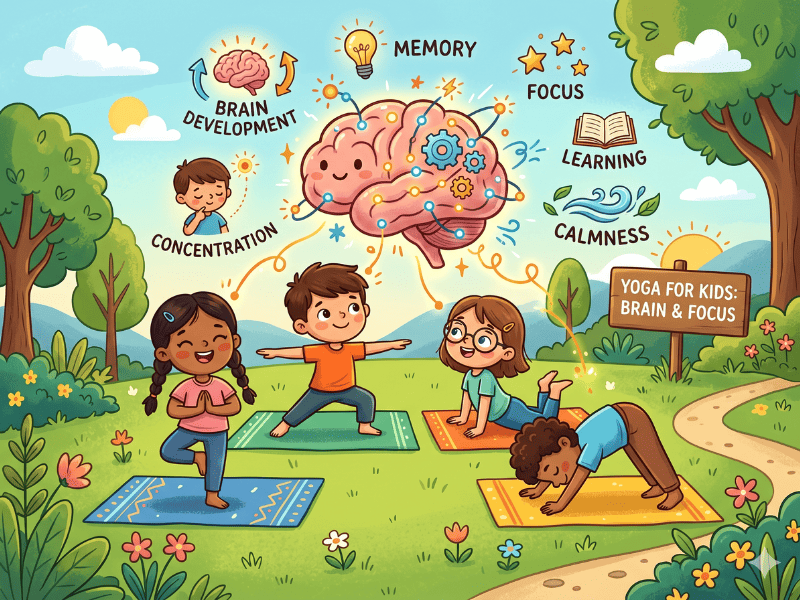
When children practice yoga regularly, it activates both hemispheres of the brain. This improves coordination, memory, and learning ability. Controlled breathing increases oxygen flow to the brain, which enhances clarity and mental alertness.
Research supported by organizations like the Harvard Medical School shows that mindfulness and movement practices significantly improve cognitive function and emotional regulation in children.
1. Improves Concentration and Attention Span
One of the biggest benefits of yoga is its ability to improve focus. Children learn to stay present while holding poses and following breathing patterns.
This practice:
- Reduces distractions
- Enhances attention span
- Improves listening skills
As a result, kids perform better in school and daily activities.
2. Enhances Memory and Learning Ability
Yoga strengthens neural connections in the brain, which supports memory retention. Breathing exercises and meditation calm the mind, making it easier for children to absorb and recall information.
Children who practice yoga regularly often:
- Remember lessons more effectively
- Process information faster
- Develop better problem-solving skills
3. Reduces Stress and Anxiety
Stress is a major barrier to learning. Even young children experience anxiety due to school pressure, social challenges, and overstimulation.
Yoga helps by:
- Lowering cortisol levels
- Promoting relaxation
- Teaching emotional control
A calm mind learns faster and focuses better.
4. Improves Emotional Balance and Behavior
Yoga teaches children how to manage emotions. Through mindful breathing and relaxation, kids become more aware of their feelings.
This leads to:
- Better self-control
- Reduced anger and frustration
- Improved social interactions
Programs inspired by organizations like Yoga Ed. have shown positive behavioral changes in school environments.
5. Boosts Creativity and Imagination
Yoga encourages children to think creatively. Fun poses, storytelling, and visualization exercises stimulate imagination.
Creative thinking helps children:
- Solve problems more effectively
- Express themselves confidently
- Stay engaged in learning
6. Enhances Coordination and Motor Skills
Physical movement in yoga improves balance, coordination, and body awareness. These skills are directly linked to brain development.
Better motor skills support:
- Writing and reading abilities
- Sports performance
- Overall physical confidence
Best Yoga Practices for Brain Development
Here are some simple and effective yoga practices:
Tree Pose (Vrikshasana):
Improves balance, focus, and concentration.
Downward Dog (Adho Mukha Svanasana):
Increases blood flow to the brain.
Child’s Pose (Balasana):
Promotes relaxation and mental clarity.
Butterfly Pose (Baddha Konasana):
Reduces stress and improves flexibility.
Deep Breathing (Pranayama):
Enhances oxygen supply to the brain and improves focus.
Yoga vs Screen Time: A Powerful Shift
Excessive screen time negatively impacts brain development, reducing attention span and increasing restlessness.
Yoga provides a healthy alternative by:
- Engaging both body and mind
- Encouraging real-world interaction
- Promoting mindfulness
Replacing even 20 minutes of screen time with yoga can create noticeable improvements.
How to Introduce Yoga to Kids
To make yoga effective and enjoyable:
- Keep sessions short (15–20 minutes)
- Use storytelling and games
- Practice together as a family
- Create a consistent routine
Consistency is key to seeing long-term benefits.
Long-Term Benefits of Yoga for Kids
Regular yoga practice leads to:
- Stronger brain development
- Better academic performance
- Improved confidence
- Enhanced emotional intelligence
Yoga builds a foundation for lifelong mental and physical well-being.
Conclusion
The benefits of yoga for kids’ brain development and concentration go far beyond simple exercise. Yoga helps children become more focused, calm, and confident in a world full of distractions.
By introducing yoga early, you are giving your child a powerful tool to succeed — not just in school, but in life.
Start small, stay consistent, and watch your child’s focus and mental clarity grow every day.
FAQ Section
1. How does yoga improve brain development in kids?
Yoga enhances brain function by increasing oxygen flow, improving neural connections, and promoting mindfulness.
2. Can yoga help kids concentrate better in school?
Yes, yoga improves attention span, reduces distractions, and enhances focus.
3. What age is best to start yoga for brain development?
Children can start as early as 4–5 years with simple and fun yoga practices.
4. How often should kids practice yoga?
3–5 times a week for 15–20 minutes is ideal for noticeable results.
5. Does yoga improve memory in children?
Yes, yoga supports memory retention by calming the mind and improving cognitive function.