- Written by: Admin
- June 15, 2026
- Categories: Education
- Tags: , vagus nerve exercises, vagus nerve yoga, yoga for anxiety, yoga for calmness, Yoga Guppy
If you’ve been feeling overwhelmed, anxious, or constantly “on edge,” your vagus nerve might be the missing piece of the puzzle. In 2026, one of the biggest wellness trends is nervous system regulation through yoga — and for good reason. More people are turning away from quick fixes and toward practices that work with the body, not against it.
Vagus nerve yoga is a gentle, somatic approach to movement that activates your body’s natural relaxation response. Unlike high-intensity workouts, this style of yoga focuses on slow breathing, grounding postures, and mindful awareness — helping you shift from “fight or flight” into “rest and digest” mode.
In this guide, you’ll learn what the vagus nerve is, why it matters for your mental and physical health, and 5 simple yoga poses you can start practicing today.
What Is the Vagus Nerve and Why Does It Matter?
The vagus nerve is the longest nerve in your body, running from your brainstem down through your neck, chest, and abdomen. It plays a major role in regulating your heart rate, digestion, breathing, and stress response.
When your vagus nerve is functioning well (often called having high “vagal tone“), your body can recover from stress more quickly. When it’s underactive, you may experience symptoms like:
- Chronic anxiety or feeling constantly stressed
- Poor digestion or bloating
- Trouble sleeping or staying asleep
- Fatigue and brain fog
- Difficulty calming down after stressful events
The good news? Yoga is one of the most accessible ways to stimulate the vagus nerve and improve vagal tone — no equipment needed.
How Yoga Activates the Vagus Nerve
Yoga supports vagus nerve health through three key mechanisms:
- Deep diaphragmatic breathing – Slow, belly-focused breathing directly stimulates the vagus nerve through the diaphragm.
- Gentle neck and throat movements – The vagus nerve passes through this area, so subtle stretches here can have a big impact.
- Grounding and stillness – Holding poses with awareness signals safety to your nervous system, lowering cortisol levels.
This is why somatic yoga and trauma-informed yoga practices are growing so quickly — they’re backed by both ancient wisdom and modern neuroscience.
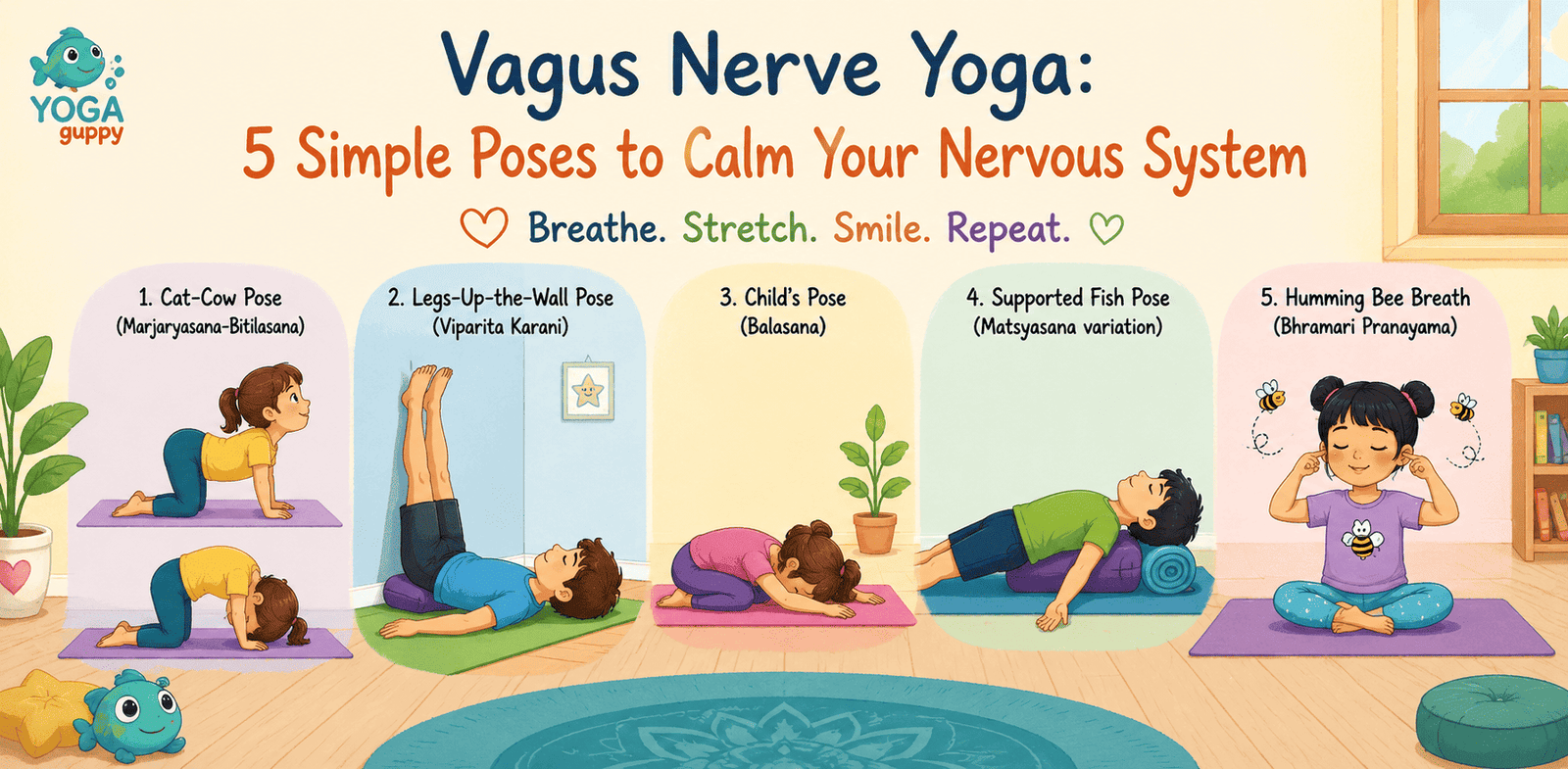
5 Simple Vagus Nerve Yoga Poses to Try Today
1. Cat-Cow Pose (Marjaryasana-Bitilasana)
How to do it: Start on your hands and knees. Inhale, drop your belly and lift your gaze (Cow Pose). Exhale, round your spine and tuck your chin (Cat Pose). Repeat slowly for 8–10 breaths.
Why it helps: This gentle spinal movement combined with deep breathing stimulates the vagus nerve and releases tension stored in the back and neck.
2. Legs-Up-the-Wall Pose (Viparita Karani)
How to do it: Lie on your back with your legs extended up against a wall, forming an L-shape with your body. Rest your arms by your sides, close your eyes, and breathe slowly for 5–10 minutes.
Why it helps: This restorative pose improves circulation, lowers heart rate, and is one of the most effective yoga poses for anxiety and nervous system reset.
3. Child's Pose (Balasana)
How to do it: Kneel on the mat, sit your hips back toward your heels, and extend your arms forward as you lower your forehead to the ground. Breathe deeply into your back for 1–3 minutes.
Why it helps: This pose creates a sense of safety and grounding, often described as one of the best calming yoga poses for emotional regulation.
Lorem ipsum dolor sit amet, consectetur adipiscing elit. Ut elit tellus, luctus nec ullamcorper mattis, pulvinar dapibus leo.
4. Supported Fish Pose (Matsyasana variation)
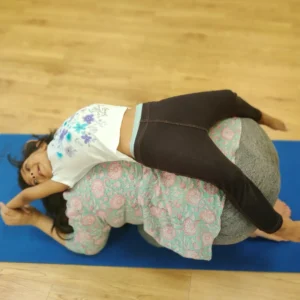
How to do it: Place a rolled towel or yoga block along your spine and lie back over it, allowing your chest to open and arms to rest out to the sides. Hold for 3–5 minutes with slow breathing.
Why it helps: Opening the chest and throat area directly stimulates branches of the vagus nerve, helping release tension linked to suppressed emotions.
Lorem ipsum dolor sit amet, consectetur adipiscing elit. Ut elit tellus, luctus nec ullamcorper mattis, pulvinar dapibus leo.
5. Humming Bee Breath (Bhramari Pranayama)
How to do it: Sit comfortably, close your eyes, and place your fingers gently on your ears. Inhale deeply, then exhale while making a humming “mmmm” sound. Repeat for 5–10 rounds.
Why it helps: The vibration from humming directly stimulates the vagus nerve through the throat and is one of the most researched vagus nerve exercises for instant calm.
How Often Should You Practice Vagus Nerve Yoga?
For best results, practice these poses 3–5 times per week, ideally in the morning to set a calm tone for your day, or in the evening to wind down before sleep. Even 10–15 minutes can make a noticeable difference in how your body responds to stress over time.Lorem ipsum dolor sit amet, consectetur adipiscing elit. Ut elit tellus, luctus nec ullamcorper mattis, pulvinar dapibus leo.
Conclusion
Vagus nerve yoga isn’t about pushing your body harder — it’s about teaching your nervous system to feel safe again. With consistent practice, these simple poses can help reduce anxiety, improve sleep, support digestion, and bring a greater sense of calm into your daily life.
If you’re ready to start your nervous-system-friendly yoga journey, bookmark this guide and try one pose today. Your body — and mind — will thank you.
Frequently Asked Questions
Q1: What is vagus nerve yoga?
Ans: Vagus nerve yoga refers to gentle yoga poses and breathing techniques designed to stimulate the vagus nerve, helping shift the body from a stressed state into a relaxed, “rest and digest” state.
Q2: Can yoga really improve vagal tone?
Ans: Yes. Practices that combine slow breathing, gentle movement, and stillness — like the poses above — have been shown to support vagal tone and nervous system regulation.
Q3: How long does it take to feel the benefits?
Ans: Many people notice a calming effect immediately after practice, while long-term benefits like better sleep and reduced anxiety typically build over a few weeks of consistent practice.
Q4: Is vagus nerve yoga suitable for beginners?
Ans: Absolutely. All five poses in this guide are beginner-friendly and require no prior yoga experience.Lorem ipsum dolor sit amet, consectetur adipiscing elit. Ut elit tellus, luctus nec ullamcorper mattis, pulvinar dapibus leo.